Connect
05 — Drone Programming · Q3 2026, 1 slot

Autonomy
that takes off.

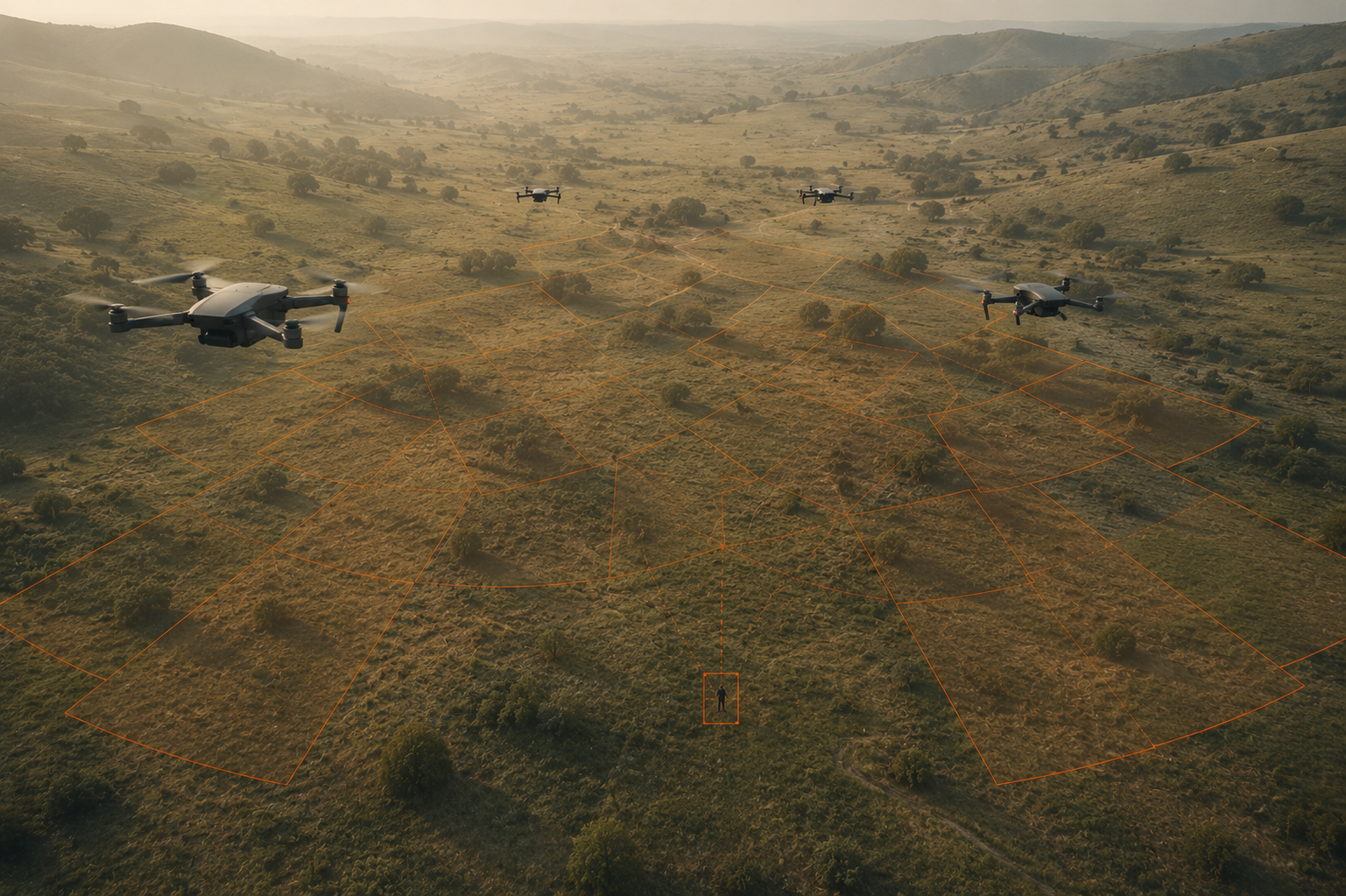
PX4 / ArduPilot stacks, mission planning, swarm logic, vision-guided navigation. We ship hardware-in-the-loop tested, FAA-aware, and built to recover gracefully when the wind picks up.

Fixed quote in 24hSee pricing6 autonomy programs · 4.9★ avg
Stacks5 stacksPX4 · ArduPilot · ROS 2 · MAVSDK
Timeline14 wkSim → tethered → open sky
Investment$25K– 60KBuild tier · fixed, no surprises
OutputFlight ready+ sim, telemetry, FAA paperwork
01 — What We Build

Autonomy,
from sim to open sky.

We architect the flight stack, write the autonomy layer, plan the missions, file the FAA paperwork, and stand on the ground watching the first flight with you. Safety-critical defaults, never optional.

// 01 · FLIGHT STACKS

PX4 and ArduPilot.
Fluent in both.

Custom airframe configs, PID tuning on your hardware, sensor calibration scripts, fail-safe rules in the controller — not just in the GCS.

PX4ArduPilotMAVSDKMAVROS
// 02 · MISSION PLANNING

Missions that
fly themselves.

Custom QGroundControl plugins, web-based GCS where the field demands it, waypoint formats that round-trip cleanly between your ops team and the aircraft.

QGCMission PlannerMAVLinkWeb GCS
// 03 · AUTONOMY & VISION

Vision-guided,
GPS-denied.

Visual-inertial SLAM with ORB-SLAM3 or OpenVSLAM, vision-based obstacle avoidance, LIDAR fusion when smoke, fog, or dust break the cameras.

ROS 2ORB-SLAM3OpenCVPyTorch
// 04 · SIMULATION

Every behavior
flown in sim first.

Gazebo and PX4 SITL for the autonomy layer, Jsbsim when fixed-wing accuracy matters, AirSim for vision pipelines. Hundreds of hours before the first tethered flight.

GazeboPX4 SITLJsbsimAirSim
// 05 · SWARM & COMMS

Swarms. Encrypted.
Audit-logged.

Distributed task allocation, encrypted MAVLink mesh, role-based access on the GCS. Proven at 8 aircraft, designed for 32, with measured failure modes per topology.

MAVLinkROS 2Mesh radioAuth
// 06 · COMPLIANCE

FAA paperwork,
done.

Part 107 awareness baked in, Section 44807 exemptions for BVLOS, EASA SORA dossiers for Europe. Started in parallel with development so the waiver lands when you're ready to fly.

Part 10744807EASA SORAAudits
02 — How We Fly

Fourteen weeks.
Four gates.

Autonomy has its own rhythm — simulation first, tethered tests next, open-sky flights last. Our process is built around hardware reality and FAA paperwork, not slide decks.

WK 0 · BRIEF
WK 1–4 · SIM
WK 5–11 · TETHERED
WK 12–14 · OPEN SKY
01
WK 0 · BRIEF & HARDWARE 5–7 days

Airframe &
autonomy plan.

PX4 vs ArduPilot, sensor stack, RTK requirements, FAA framework. We file the waiver paperwork in parallel so approval lands when you're ready to fly.

Architecture · + FAA filing started
02
WK 1–4 · SIMULATION 4 weeks

Every behavior
flown in sim.

Gazebo or PX4 SITL environment built around your mission. Hundreds of simulated flight hours, failure-mode coverage, geofence rules verified — all before any aircraft moves.

Sim coverage · + failure-mode report
03
WK 5–11 · TETHERED 7 weeks

Tethered
and tested.

200+ hours on a 4m tether. PID tuning on your hardware, sensor calibration, mission rehearsals, redundancy checks. We don't go open-sky until every behavior is boring.

Tethered logs · + weekly demo flights
04
WK 12–14 · OPEN SKY 3 weeks

First
mission.

FAA waiver in hand, ground station deployed, comms tested. We stand on the ground next to your pilot for the first three missions, then hand over the keys.

Flight-ready · + telemetry pipeline
03 — Selected Autonomy Work

Missions that
took off.

3 of 22 · curated for drone

Production autonomy programs — each cleared its safety gate, filed its paperwork, and now flies on a customer's calendar.

Featured · Solar Farm Survey04 / 22Aria — autonomous solar-farm aerial survey
// Case 04 · 2025 · Aerial Survey

Ariasolar survey.

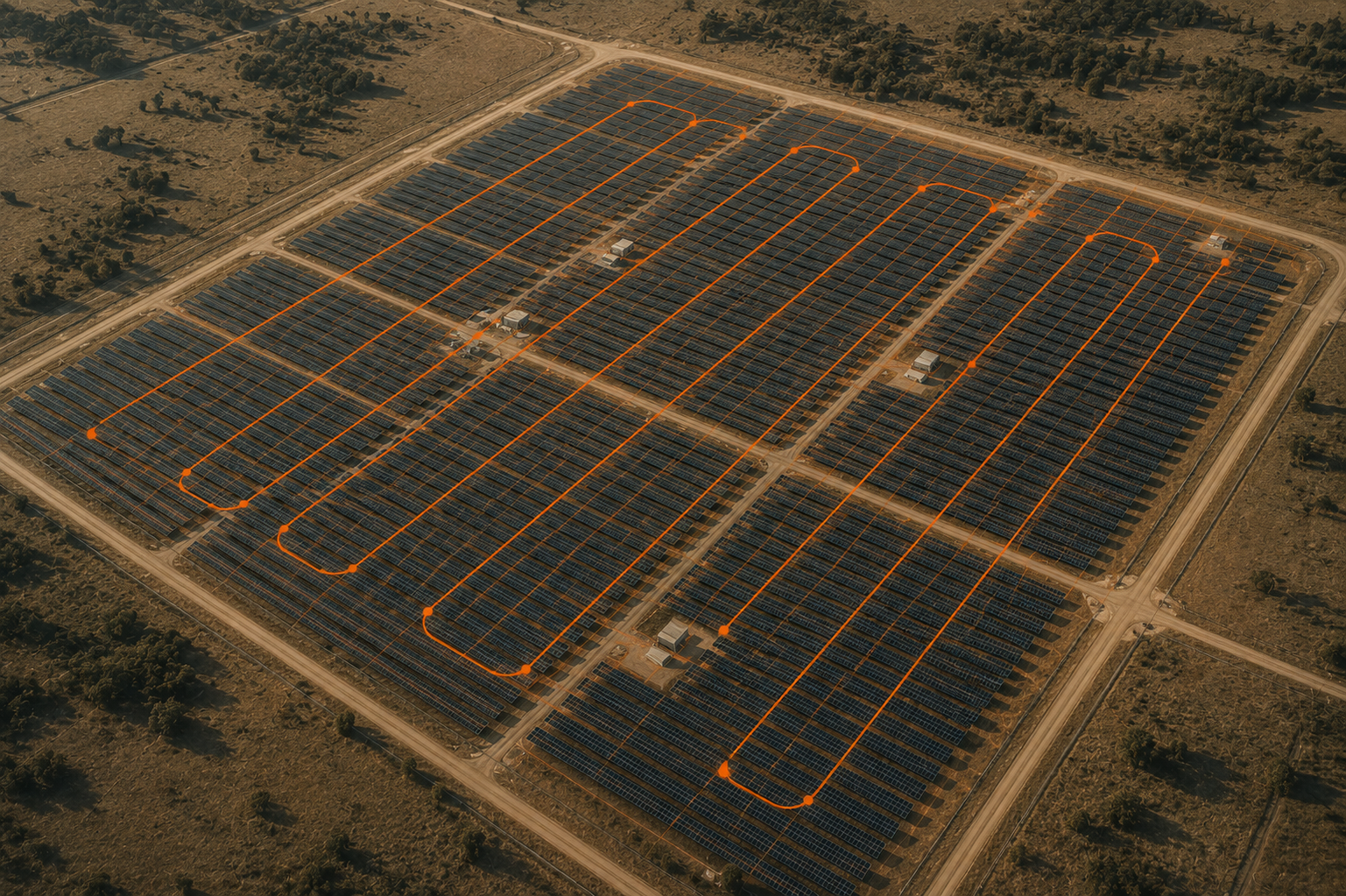
An autonomous photogrammetry pipeline for utility-scale solar farms. PX4 + custom mission planner, gimbal-stabilized RGB+thermal capture, RTK-pinned waypoints, geo-tagged stitching — surveyed 240ha in 41 minutes, what their crews used to take a full day.

240ha
Surveyed / flight
12×
Faster than crew
2.3cm
RTK accuracy
PX4MAVSDKROS 2OpenCV
Read the case study
Agriculture · Crop Survey07 / 22Verdant — multispectral crop-health drone survey
// Case 07 · 2024 · Precision Ag

Verdantcrop survey.

Autonomous multispectral crop-health surveys for large farms. A PX4 mission planner flies pre-mapped grids capturing NDVI imagery, stitched into field-level health maps — flagged stressed zones across 320ha before they were visible from the ground.

320ha
Per flight
4-band
Multispectral
7×
Faster scouting
PX4MAVSDKROS 2OpenCV
Read the case study
Warehouse · Inventory11 / 22Hangar — indoor-autonomous warehouse inventory drones
// Case 11 · 2024 · Indoor Autonomy

Hangarwarehouse fleet.

A fleet of indoor-autonomous inventory drones for a 220k-sqft DC. Visual-SLAM in GPS-denied aisles, barcode + OCR at fly-by, tied into the WMS — cycle counts in three hours, down from a full weekend.

1.4k
Pallets / hour
98%
Read accuracy
16×
Faster cycle count
ROS 2SLAMMAVROSOpenCV
Read the case study
04 — Engagement

Three
ways to work.

Fixed-price sprints, full builds, or ongoing programs. We'll tell you which fits in the scoping call — and if none fit, who else to talk to.

// 01 · Sprint
14 days

Sprint
tier.

A fixed two-week burst. Best for sim-environment setup, hardware / FAA gap analysis, or a focused autonomy prototype.

From$6k
Fixed price · 2 wks
1 autonomy eng
+ sim
20% reserved
  • Sim environment + 1 mission
  • Hardware & FAA gap report
  • Behavior list with sim coverage
  • One demo flight in sim
// 03 · Program
Monthly

Program
tier.

Embedded autonomy team for behavior expansion, new airframes, and swarm scaling. Monthly engagements, on-call.

From$9k / mo
Monthly · roll-off any time
2+ autonomy engs
+ pilot
dedicated
  • Embedded team in your stack
  • Weekly flight & ops reviews
  • Behavior expansion on-call
  • Roadmap planning included
  • Swarm / new airframes
05 — Questions, Answered

Before
you write back.

A reader, not an accordion. Pick a question on the left — the full answer opens on the right. Filter by topic, or step through with prev / next. Missing one? Ask in the brief and we'll answer in the reply.

Q·01Engineering★ Most asked

PX4 or ArduPilot — which fits our mission?

PX4 if you're building a clean autonomy product, integrating with modern companion computers (Jetson, RPi), or shipping to enterprise customers who want a mature toolchain.

ArduPilot if you need a wider hardware envelope (rovers, boats, blimps), want hands-on telemetry control via MAVProxy, or have a team with legacy ArduCopter experience. We're fluent in both — the choice happens in week 0 with your hardware vendor in the room.

Q·02ProcessIncluded

Do you handle FAA paperwork — Part 107, BVLOS waivers?

Yes. Part 107 awareness is built into every flight plan. For BVLOS, swarm, or above-400ft operations we draft the Section 44807 exemption package or Part 107 waiver and walk it through with FAA Aeronautical Center.

Most waivers take 90–120 days from filing. We start the paperwork in parallel with development so the approval lands when you're ready to fly. EASA paperwork available for European deployments.

Q·03Operations

Who owns the airframe and the spec and final IP?

You do. We design the autonomy layer — flight controller config, mission planning, ground station, telemetry pipeline. The airframe is yours (or your hardware partner's), the firmware fork is in your GitHub org from week 1.

All Gazebo / Jsbsim simulation environments, MAVSDK test harnesses, and CI pipelines transfer with the project. No vendor lock-in, no "call us to update firmware."

Q·04Engineering

Indoor, outdoor, or both? GPS-denied, too?

Both. Outdoor flies on RTK GPS for 2cm positioning. Indoor and GPS-denied environments use visual-inertial SLAM (ORB-SLAM3, OpenVSLAM) on a companion computer — we've shipped this for warehouse and tunnel operations.

Transition handling between the two — outdoor flight that enters a building or a covered structure — is the hard part. We architect graceful fallback in week 1.

Q·05Engineering

Vision-based vs LIDAR navigation — which for our payload?

Vision if SWaP is tight, daylight is reliable, and you have a companion GPU. LIDAR if you fly in fog, dust, low-light, or need cm-accurate obstacle avoidance regardless of texture.

Most production autonomy systems fuse both — Livox or Velodyne LIDAR for safety-critical, vision for richer semantics. We'll quote the sensor package in week 1 with measured failure modes per environment.

Q·06OperationsSafety-critical

How do you handle failure modes — what's the safety story?

Three layers. Sim-first — every behavior validated in Gazebo before tethered tests. Tethered — 200+ flight hours on a 4m tether before open sky. Redundancy — dual-IMU, GPS failover, return-to-home triggered on link loss, geofence enforced in the flight controller.

Black box logs every flight. Post-incident review baked into our weekly cadence. Zero crashes on customer hardware in 4 years, and we'd rather over-engineer than learn from the first one.

Q·07Engineering

Swarm — how many drones, what's your ceiling?

Proven at 8 aircraft in production (search-and-rescue, Skyline). Designed and simulated to 32 aircraft for an inventory-mapping pilot. Above that, mesh telemetry becomes the bottleneck — we'd want a specialist comms partner.

Coordination uses our distributed coverage planner (auction-based task allocation) over an encrypted MAVLink mesh. Each aircraft can complete its assigned area autonomously if comms drop.

Q·08Pricing

What if we just need the mission planner UI, just the GCS plugin?

Sprint tier — $6k, two weeks. We build a custom QGroundControl plugin, Mission Planner add-on, or web-based GCS for your specific operation. Includes mission file format, geofence editor, and live telemetry views.

06 — By the numbers

Four years of autonomy.
Flight receipts.

Real numbers from autonomous flight programs — pulled from MAVLink logs, QGroundControl, and ROS bag data. Updated quarterly.

// 01
6+
Autonomy programs
↑ 1 this quarter
// 02
99.2%
Mission success rate
Stable · 1,400 flights
// 03
4.2k
Flight hours logged
↑ 800 vs Q1
// 04
14wk
Sim → open sky
Tethered + tested + flown
Source · MAVLink · QGroundControl · ROS bagLast updated Q2 2026 · refreshed quarterly
07 — Said About The Work

One quote.
From the right ops director.

There's a wall of testimonials on the home page. This is the one that matters for autonomy — a solar operator that replaced a full day of crew work with a 41-minute autonomous flight.

★★★★★

We told BytesGenX our 240-hectare sites took a full day to survey, weather permitting. They came back with a PX4 + RTK + thermal pipeline and flew the first complete survey in 41 minutes, with 2.3cm RTK accuracy on every waypoint.

The FAA paperwork was done before the first flight. That's the part that usually kills projects like this. They handled it like it was Tuesday.

PX4 · MAVSDK · ROS 2Build tier · 16 weeksDeployed · Q2 2026
Also said about the work+5 more on the home page
★★★★★

"Sim, then tethered, then sky. Boringly safe. Exactly the partner you want flying near humans."

Khalid Bashir · Director, Skyline SAR
★★★★★

"Visual-SLAM in our GPS-denied warehouse actually worked. Three vendors had quoted us before — they were the only ones who delivered."

Jenna Wu · VP Ops, Hangar Logistics
★★★★★

"FAA waiver in 94 days. First flight on day 95. We weren't sure that was possible."

05 · Drone · Q3 2026 · 1 slot

Tell us about
your autonomy program.

Whether it's a sim-environment sprint or a multi-quarter open-sky deployment, we reply within 4 hours — usually with a fixed quote, a sensor recommendation, and a FAA filing plan.

Response time
~4h on weekdays
Min. engagement
2-week sprint
Slots — Q3 2026
1 of 2 · drone
Studio location
Remote · 4 timezones

Autonomy brief

~ 90 sec
BUILD TIER
$15K– $40K
<$5K$5K$15K$40K$80K+
Encrypted · We never share your brief