Detection,
at line speed.
YOLOv8 and RT-DETR for the speed/accuracy frontier, Detectron2 when you need every last point of mAP. Quantized to INT8 / FP16 for the device that's actually in the field.
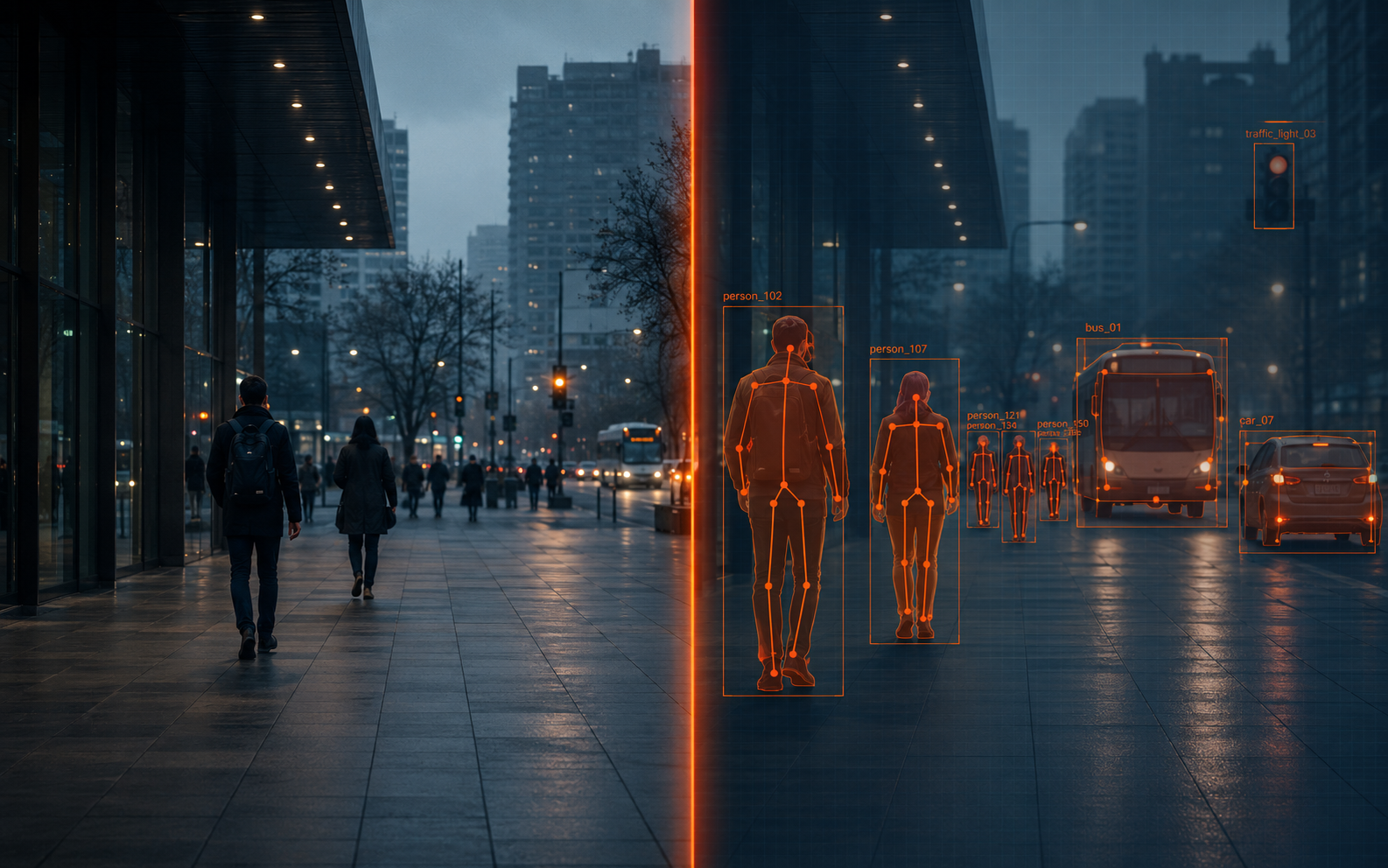
Detection, tracking, OCR, 3D reconstruction. On-device inference at 30+ FPS, models we trained on your data, deployed where the camera lives — not phoned to a cloud GPU.
From labeling to deployment, end-to-end. Edge-first when latency or privacy demands it, cloud when scale does. We benchmark on your hardware before promising a number.
YOLOv8 and RT-DETR for the speed/accuracy frontier, Detectron2 when you need every last point of mAP. Quantized to INT8 / FP16 for the device that's actually in the field.
SAM 2 for promptable segmentation, Mask2Former for trained-from-scratch tasks, custom decoders for medical and industrial use cases.
ByteTrack and DeepSORT for multi-object tracking, MMPose for body and object orientation, identity re-ID for retail and security workflows.
PaddleOCR for general extraction, LayoutLM for structured documents, custom heads for invoice / receipt / form pipelines. Multi-language out of the box.
CoreML on iOS, NNAPI / LiteRT on Android, TensorRT on NVIDIA, ONNX Runtime on Windows/Linux. Quantization, pruning, fusion — all measured on your target device.
Label Studio pipeline, active learning to pick the next 500 images, training runs on W&B, drift detector in production. The retraining pipeline transfers with the project.
Vision systems have their own rhythm — data first, model second, hardware reality always. Our process is built around real-world deployment, not demo videos in a lit room.
Define the task graph (detect / segment / track / OCR), the label schema, and the success metric. Labeling pipeline stood up, first 500 labels collected with active learning.
Label Studio · + schema + fixed quoteBaseline model (YOLOv8n or RT-DETR-S), trained on the initial label set, benchmarked on your target hardware. Frank report: what's achievable, what isn't, what we need more of.
Baseline mAP · + device benchmarkIterative labeling on hard cases, architecture tuning, quantization to INT8 / FP16, latency optimization. Weekly model release with measured metrics on real devices.
Weekly releases · + metric reportsCoreML / NNAPI / TensorRT packaging, drift monitor wired, retraining pipeline handed over. Your team can run the next training cycle without us.
Live at the edge · + retraining pipelineProduction CV deployments — trained on the customer's data, shipped to the customer's device.

A real-time CV system that reads restaurant table occupancy from a single overhead camera — no sensors. YOLO11 + ByteTrack detect and track guests; a per-table state machine flags groups waiting too long, all at 30 FPS on the feed.

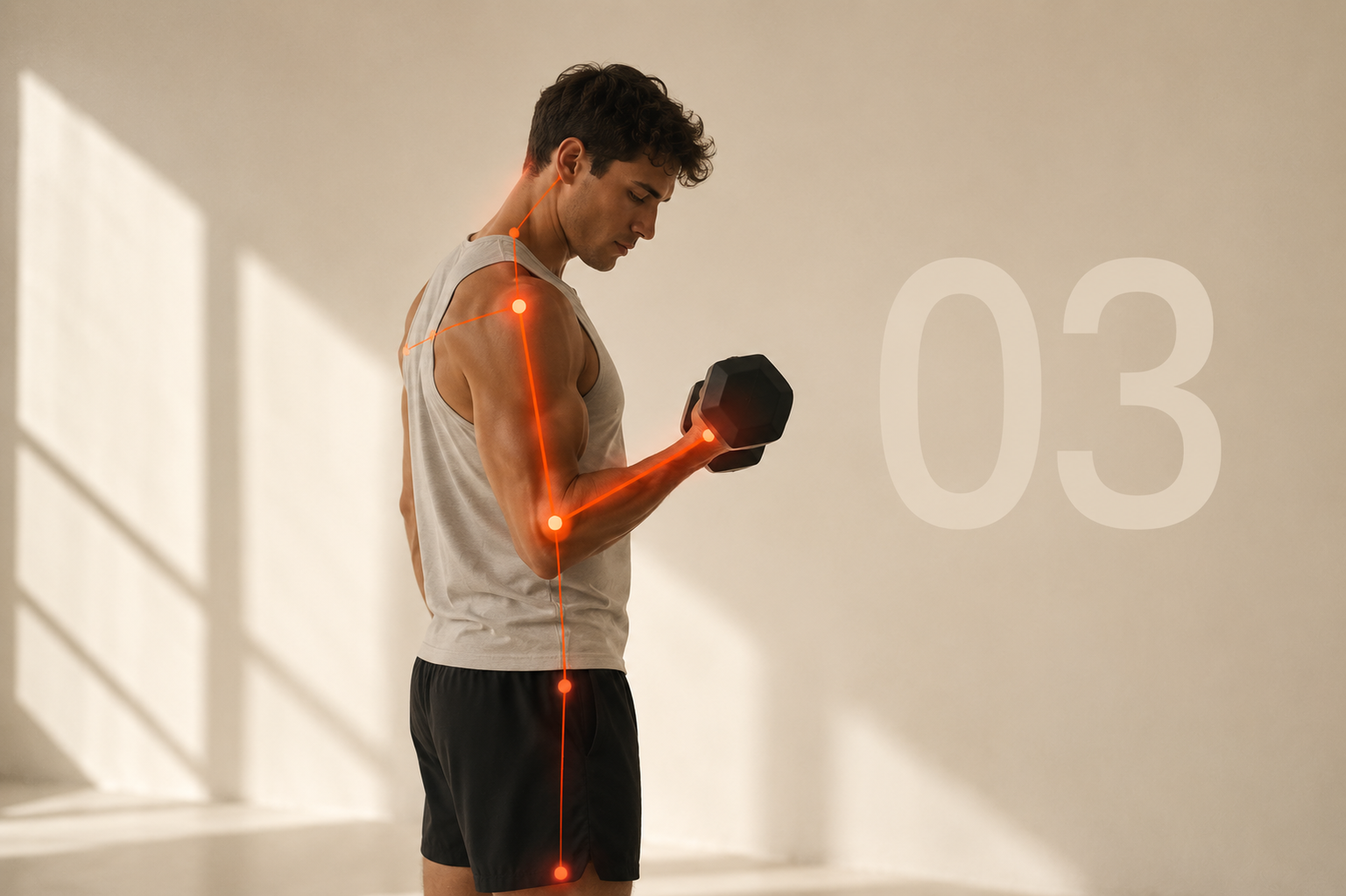
An AI workout partner that counts reps and checks form from any webcam — no wearables. MediaPipe Pose reads 33 landmarks; per-exercise joint-angle state machines count only full-range reps — 98% counting accuracy across six exercises.

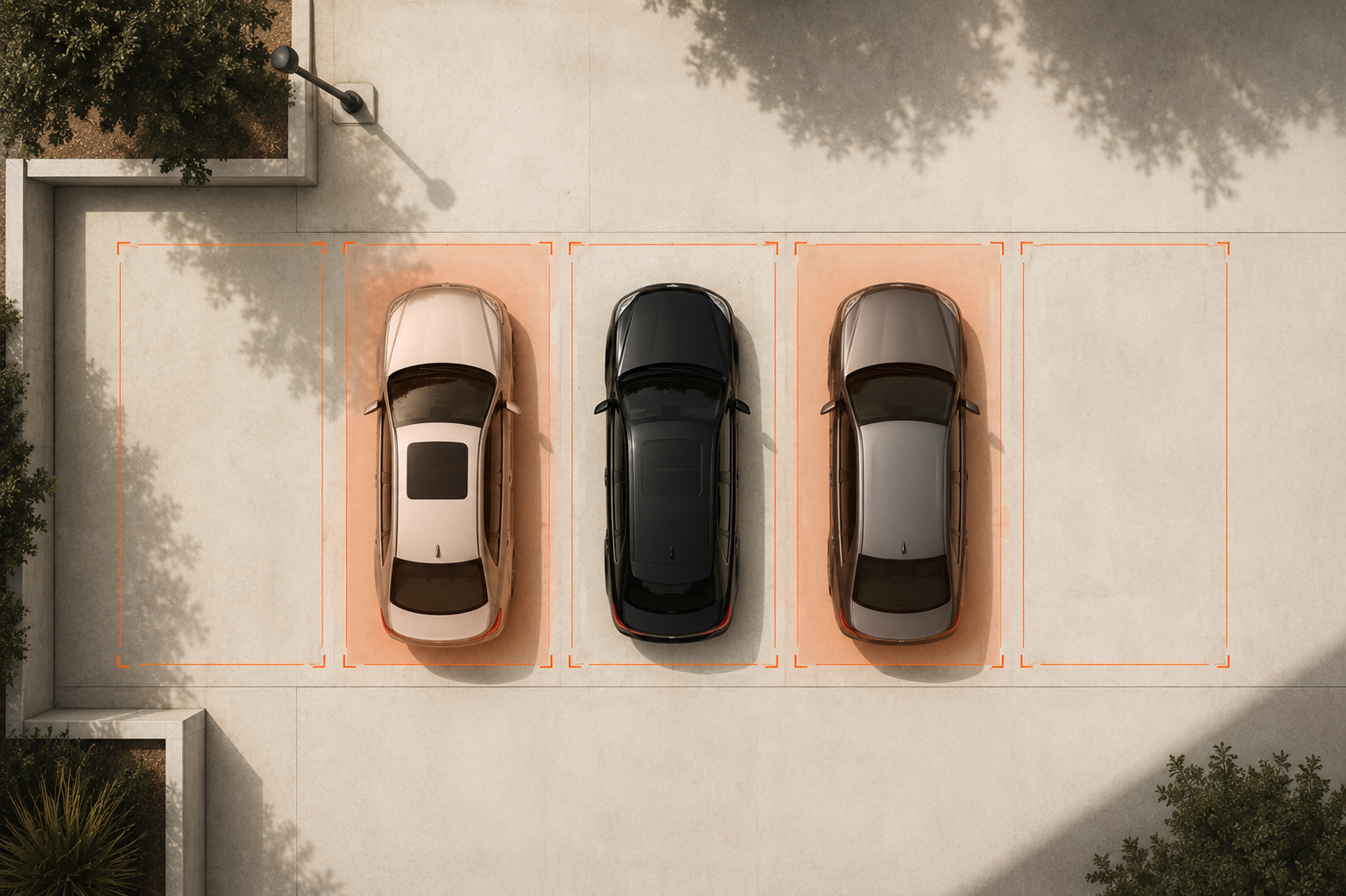
Parking-lot occupancy read from the cameras already on the poles — no ground sensors. YOLO11 + ByteTrack map vehicles to polygon bay zones; a state machine flags overstays and surfaces free spots in under a second.
Fixed-price sprints, full builds, or ongoing programs. We'll tell you which fits in the scoping call — and if none fit, who else to talk to.
A fixed two-week burst. Best for a baseline model on initial data, a device-benchmark report, or a focused detection prototype.
Idea to edge deployment. Full lifecycle — labeling, training, quantization, on-device packaging. Fixed price.
Embedded team for retraining cycles, drift response, and new tasks. Monthly engagements, roadmap on-call.
A reader, not an accordion. Pick a question on the left — the full answer opens on the right. Filter by topic, or step through with prev / next. Missing one? Ask in the brief and we'll answer in the reply.
Edge if latency budget is tight (< 100ms), privacy is non-negotiable, or connectivity is unreliable. Cloud if you need the largest models, batch processing, or model swaps in production.
Most production CV systems are hybrid: a small, fast detector on-device that wakes up a heavier cloud model for high-confidence cases. We architect this split in week 1, with measured latency budgets on your actual hardware.
Yes. Labeling pipeline is part of the engagement — we set up Label Studio (or your tool of choice), write the schema with you, and bring in our labeling partners for the bulk pass. Active learning picks the next 500 images that actually move the needle, not random ones.
Most clients start with 500–2000 labels and reach a usable model within 6 weeks. The full eval set typically settles at 3–10k labels.
You do — entirely. Weights, training data, eval set, labeling instructions — all your IP, all transferred at the end of the engagement.
We use your cloud accounts for training compute. No vendor lock-in, no "call us to retrain." Your data scientists can fork the pipeline on day one of handoff.
Usually yes, but we benchmark before promising. In week 1 we deploy a baseline (YOLOv8n or RT-DETR-S) to your target device and measure FPS, memory, and battery. That number drives the model-architecture decision.
If 30 FPS isn't achievable with acceptable accuracy, we surface the trade-off cleanly: smaller model, lower resolution, frame skipping, or hardware upgrade. No surprises in week 8.
Detection if you need what + where (bounding boxes). Segmentation if you need shape (defect outlines, medical imaging). OCR for text. Pose for body/object orientation.
Most production systems combine two — e.g. detect a panel, then segment the defect inside it. We'll write the task graph in week 0 with target metrics per stage.
Three things. Drift monitor — production embeddings continuously compared to training distribution; alert on divergence. Confidence floor — predictions below threshold routed to human review and added to the next training batch.
Retraining cadence — quarterly by default, or triggered when drift threshold is hit. We hand over the retraining pipeline so you can run it without us.
Yes. We deploy via CoreML on iOS, NNAPI / LiteRT on Android, ONNX Runtime on Windows/Linux edge, TensorRT on NVIDIA. Quantization (INT8/FP16) is standard so you get 2–4× speedup with < 1% accuracy loss.
Nothing leaves the device. For audit, we log inference metadata locally and sync only the metadata when connectivity returns.
Sprint tier — $6k, two weeks. We benchmark your model on target hardware, optimize (quantize, prune, fuse), and ship a production deployment with monitoring. Most clients see 2–5× speedup with the same accuracy.
Real numbers from deployed vision systems — pulled from Weights & Biases, Sentry, and on-device telemetry. Updated quarterly.
There's a wall of testimonials on the home page. This is the one that matters for vision — a utility-scale solar operator that replaced clipboards with on-device defect detection at 34 FPS.
Our inspectors carry the same iPhones we issued in 2022. BytesGenX trained a panel-defect detector that runs on those exact phones at 34 FPS, with mAP@0.5 of 0.94 — and zero cloud round-trips.
The first crew that used it found fourteen defects on a site we'd cleared two weeks earlier. That single inspection paid for the project.
★★★★★"Labeling, training, deployment — end to end. We didn't have to hire a single ML engineer."
★★★★★"Caught 96% of defects our humans were missing. At line speed. The math wrote itself."
★★★★★"Real-time was the hard part. They made it boring. Boring is what production needs."
Whether it's a baseline-on-your-data sprint or a multi-quarter edge deployment, we reply within 4 hours — usually with a fixed quote, a device-benchmark plan, and a label budget.